Enhancing Summer Road Trips With BlueCruise Highway Driving in the Lincoln Aviator
July 30 2026,
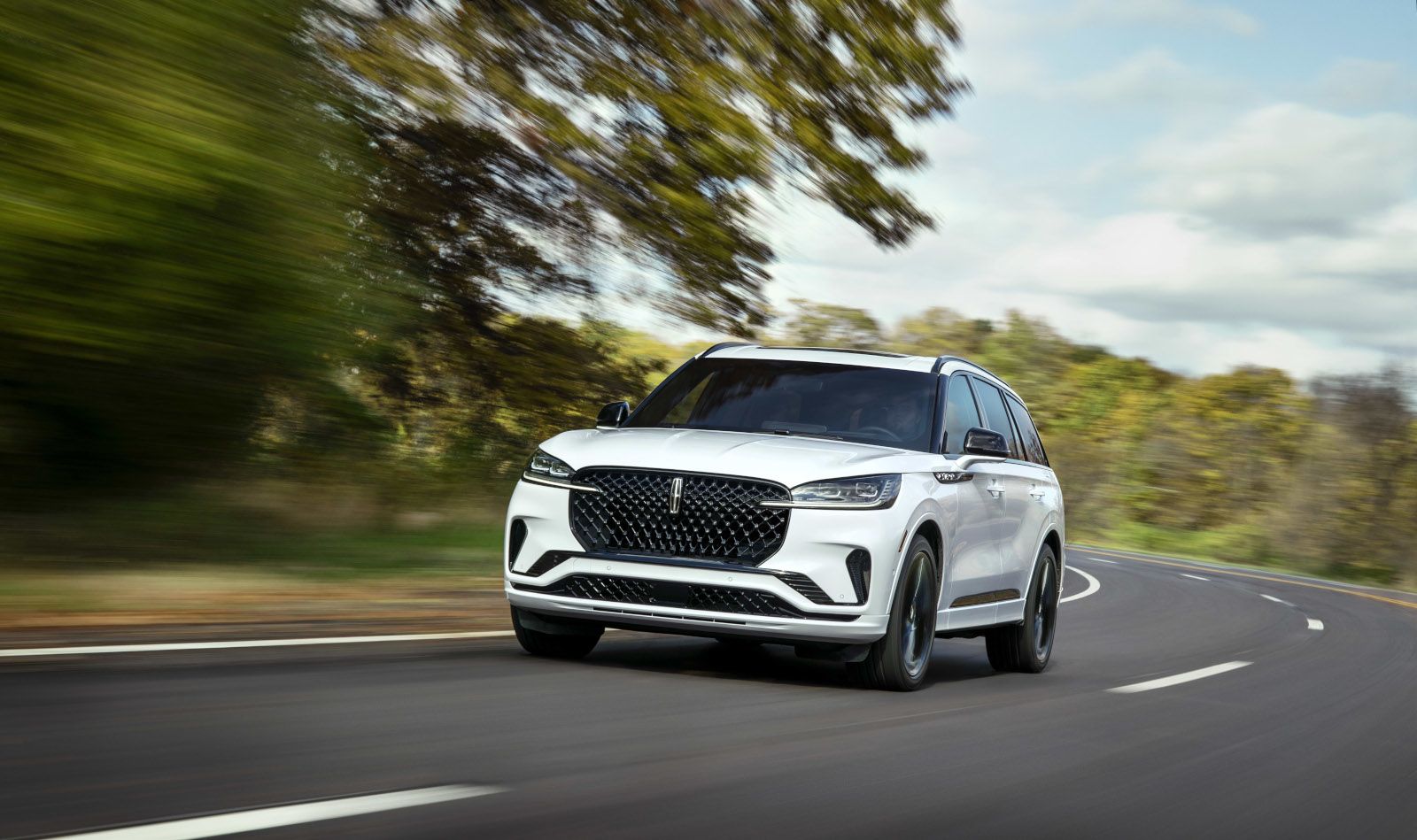
A summer drive across British Columbia often means long highway stretches, mountain grades, and hours behind the wheel before the next stop. For shoppers looking at the Lincoln Aviator, one of the first questions is how BlueCruise changes that drive, and whether the three-row SUV’s cabin tech makes the kilometres feel shorter.
This is a plain-language look at what BlueCruise does, how it works, and why it matters once you are a few hours into a longer trip.
What Is BlueCruise
BlueCruise is a highway-focused driver-assist system built for divided highways, the kind of road most summer highway trips run on for hours at a stretch. It is standard on every 2025 Aviator, and every Aviator includes four years of hands-free highway driving at purchase.
BlueCruise is not a self-driving system. Inside mapped sections of highway called Hands-Free Blue Zones, it assists with steering, acceleration, and braking, but the driver has to stay attentive and ready to take back control at any point.
How BlueCruise Works
On a supported highway, BlueCruise uses the Aviator’s front windshield camera along with front and corner radar sensors to track lane markings and the vehicles around it. A driver-facing camera checks that eyes stay on the road. If attention drifts, the system prompts a return to full engagement before it eventually cancels.
Two features build on that same system:
- Lane Change Assist lets the driver tap the turn signal so the Aviator changes lanes hands-free once the path is clear.
- In-Lane Repositioning shifts the vehicle slightly within its lane to add space from traffic alongside it.
Running BlueCruise requires an active Lincoln Connected Services plan, the Lincoln Way app, and modem activation. The included service period covers the trial or included duration that comes with the vehicle; continuing after that requires purchase.
Why It Matters on Longer Highway Drives
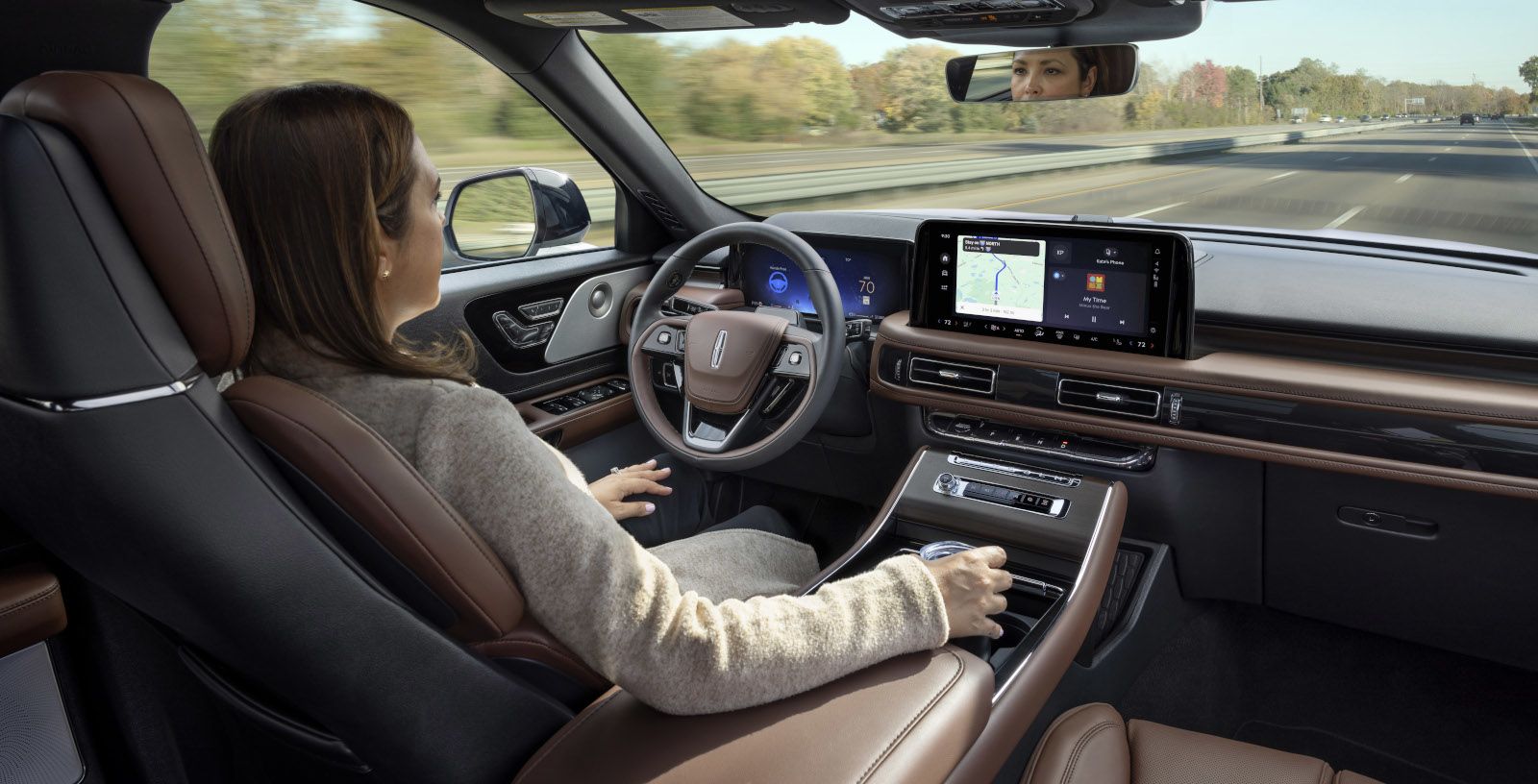
Steady highway cruising, not stop-and-go city traffic, is the scenario BlueCruise supports most. Holding a lane and pace for hour after hour is a repetitive task that wears a driver down on a long weekend trip, and it is the exact job BlueCruise is built to take on.
It is worth knowing the limits, too. BlueCruise’s lane centering will not operate while towing a trailer, when the Aviator is loaded near its maximum payload, in poor weather, or on roads without clear lane markings. Towing with the Aviator’s 5,000-lb (2,268 kg) rating means the driver stays fully in charge of the wheel.
Behind the wheel, the Aviator’s 3.0L twin-turbo V6 makes 400 hp and 415 lb-ft of torque through a 10-speed automatic, power that helps with passing and mountain grades on longer stretches between stops.
Inside, a 13.2-inch touchscreen and 12.4-inch digital cluster keep navigation and media within reach, with support for Apple CarPlay, Android Auto, Google apps, and Amazon Alexa. The standard 14-speaker audio system can be upgraded to the available 28-speaker Revel Ultima 3D Audio System for fuller sound on long stretches. Standard equipment also includes a panoramic vista roof, an adaptive suspension, and heated first-row seats, small comforts that add up on a drive that runs several hours. Wireless phone charging and USB ports across all three rows round out the comfort case for passengers.
Cargo space flexes with the trip:
- 544 litres behind the third row for daily errands
- 1,209 litres behind the second row with the third folded
- 2,226 litres behind the front seats when hauling gear for a longer getaway
Who Benefits Most
BlueCruise suits families driving to the coast or the interior with kids in the back, couples on a weekend getaway, and anyone who regularly covers long highway distances. The three-row Aviator, built for six or seven passengers plus luggage or sports gear, is suited to that kind of trip.
Because BlueCruise is standard across the Aviator lineup, from Premiere through Reserve to Black Label, hands-free highway driving is not a decision point between trims. The differences between them come down to other equipment, like the Elements Package Plus, optional on Reserve and included on Black Label, which adds heated and ventilated first- and second-row seats and a heated steering wheel.
Planning a Long Drive in the Aviator
BlueCruise turns long, steady highway stretches into a lighter task for the driver, without removing the need to stay alert and in control. Paired with the Aviator’s three-row cabin and standard comfort features, it is suited to the kind of extended summer travel common across British Columbia.
Visit Suburban Lincoln in Victoria to see the 2025 Aviator’s BlueCruise-equipped lineup and book a test drive focused on highway comfort, cabin tech, and family-trip practicality.